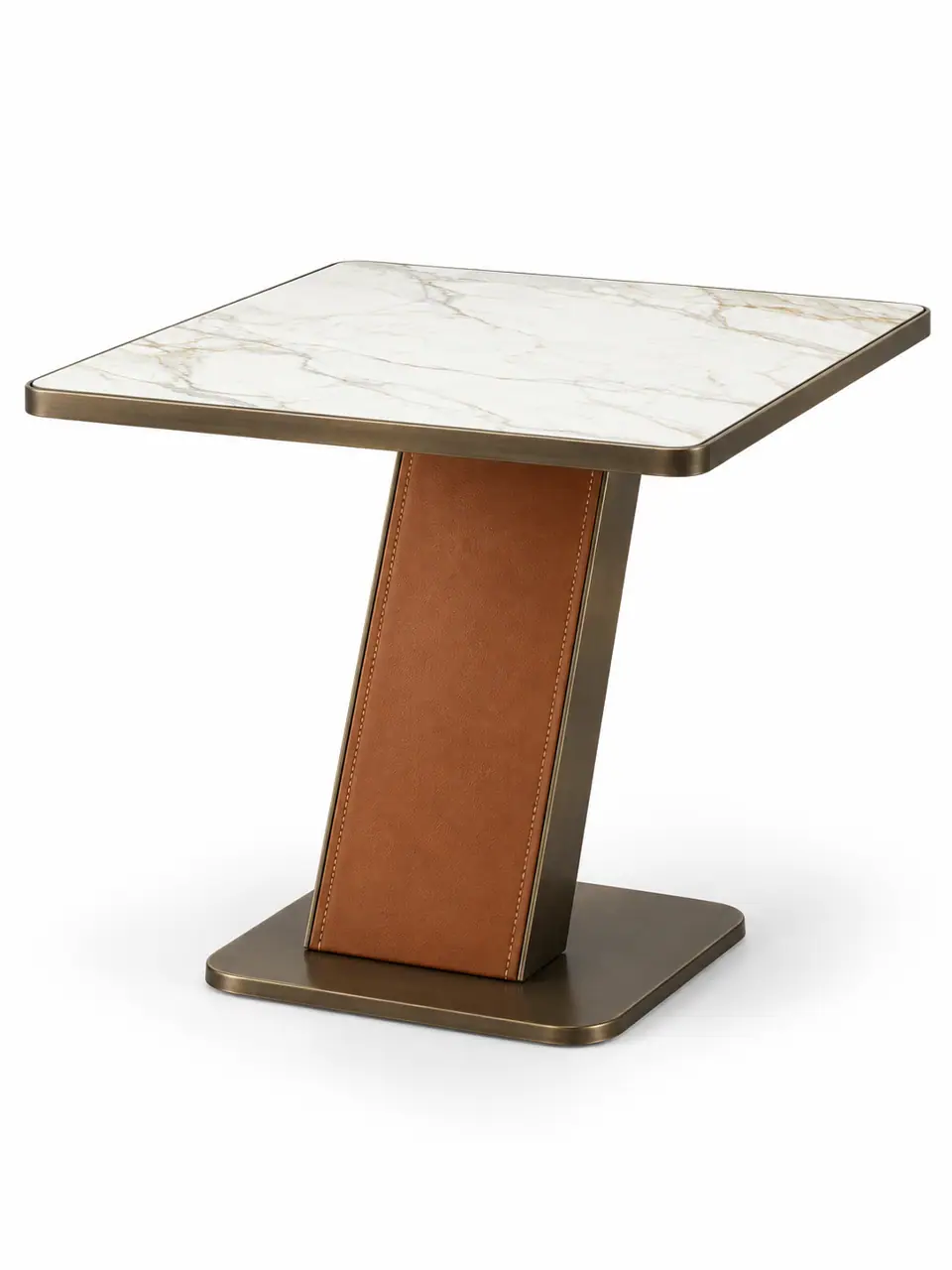
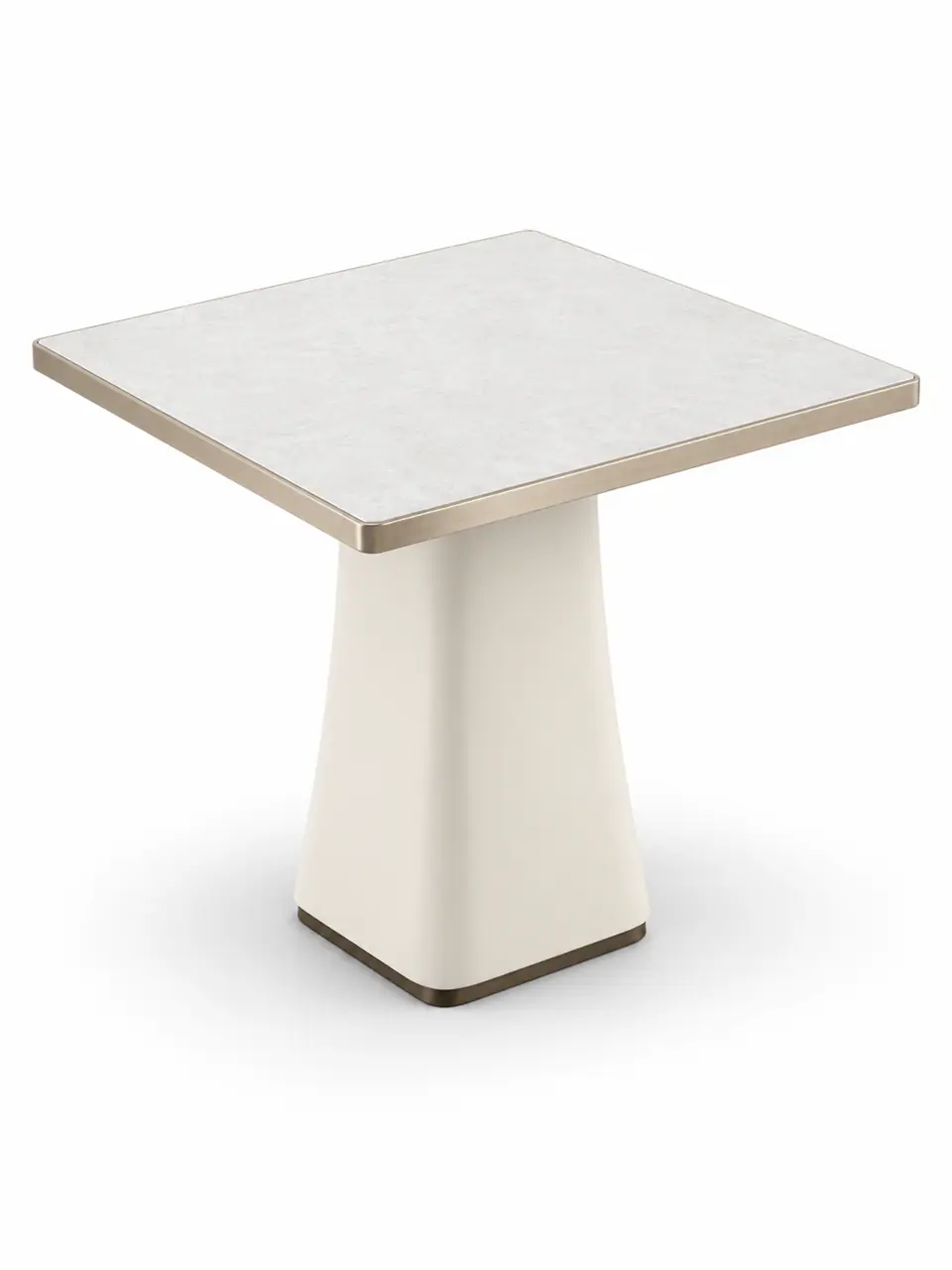
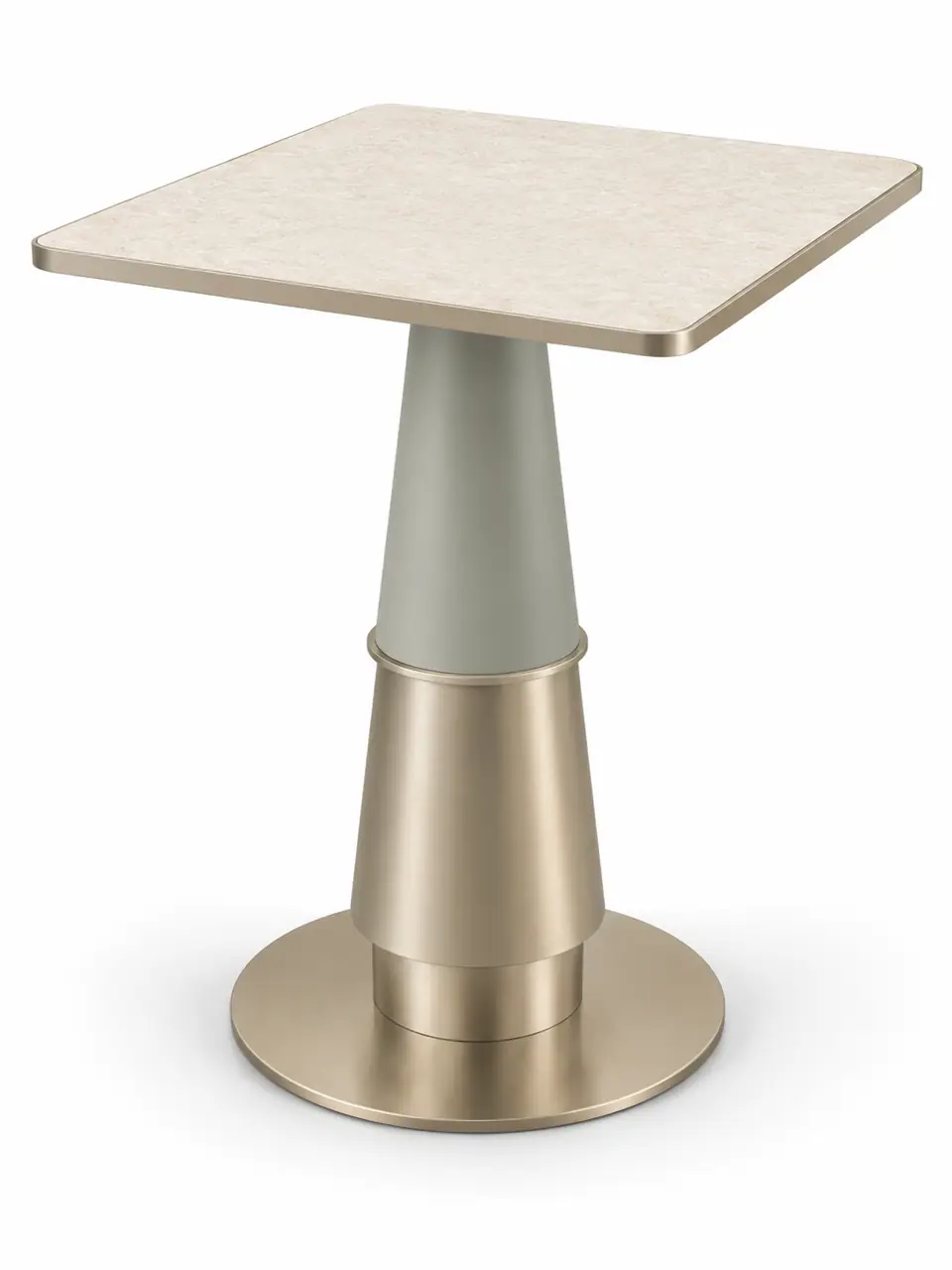
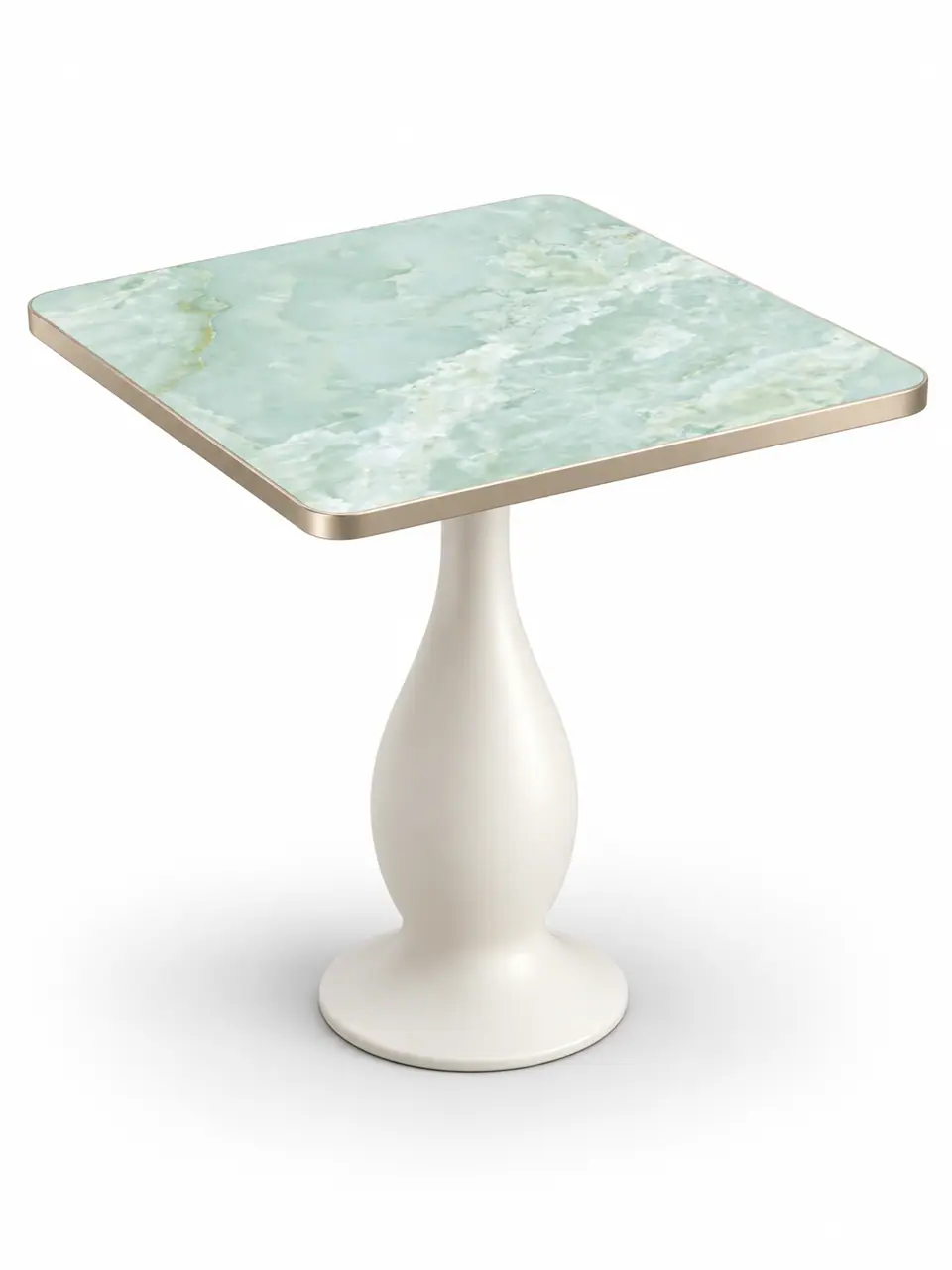
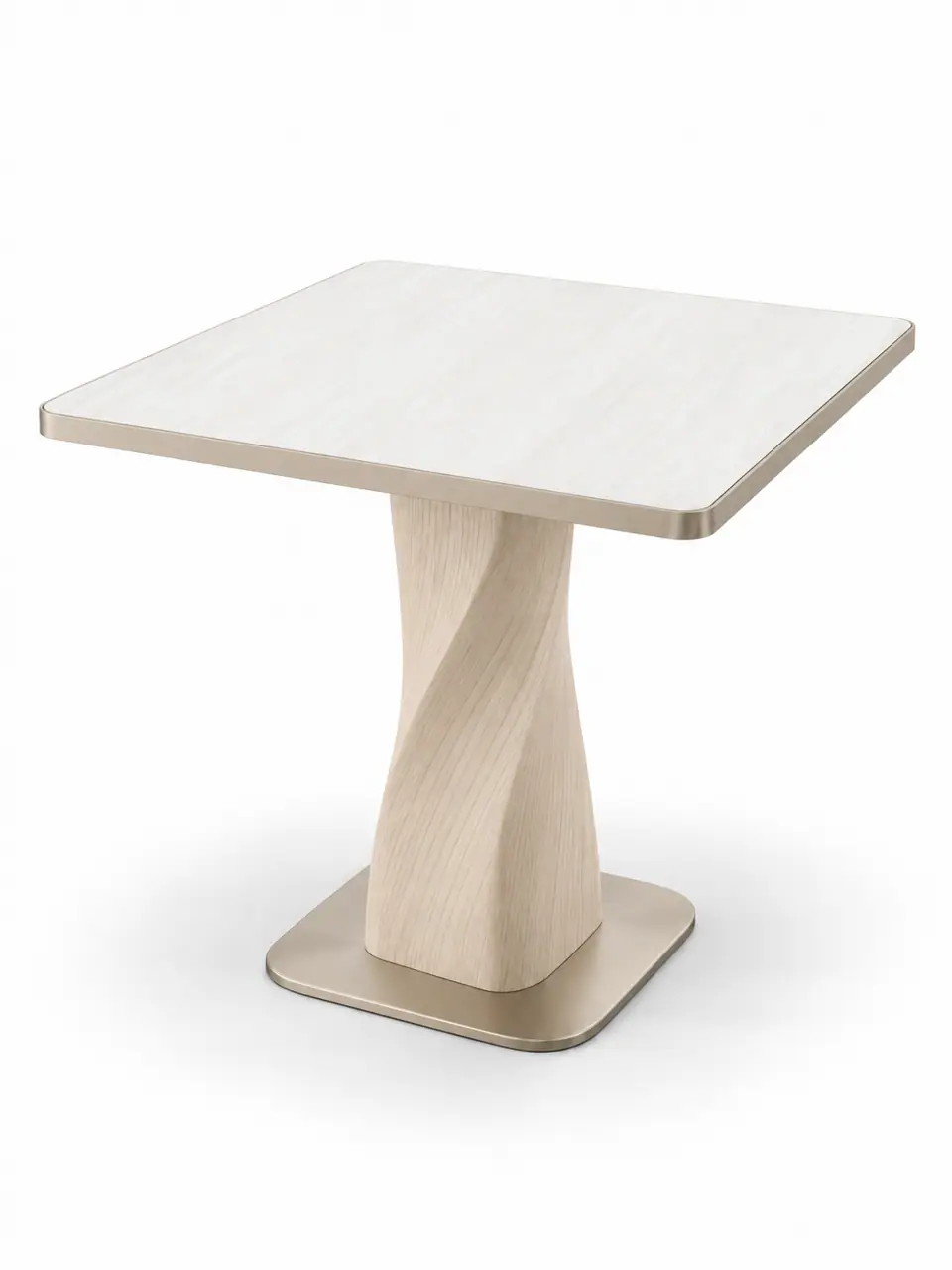
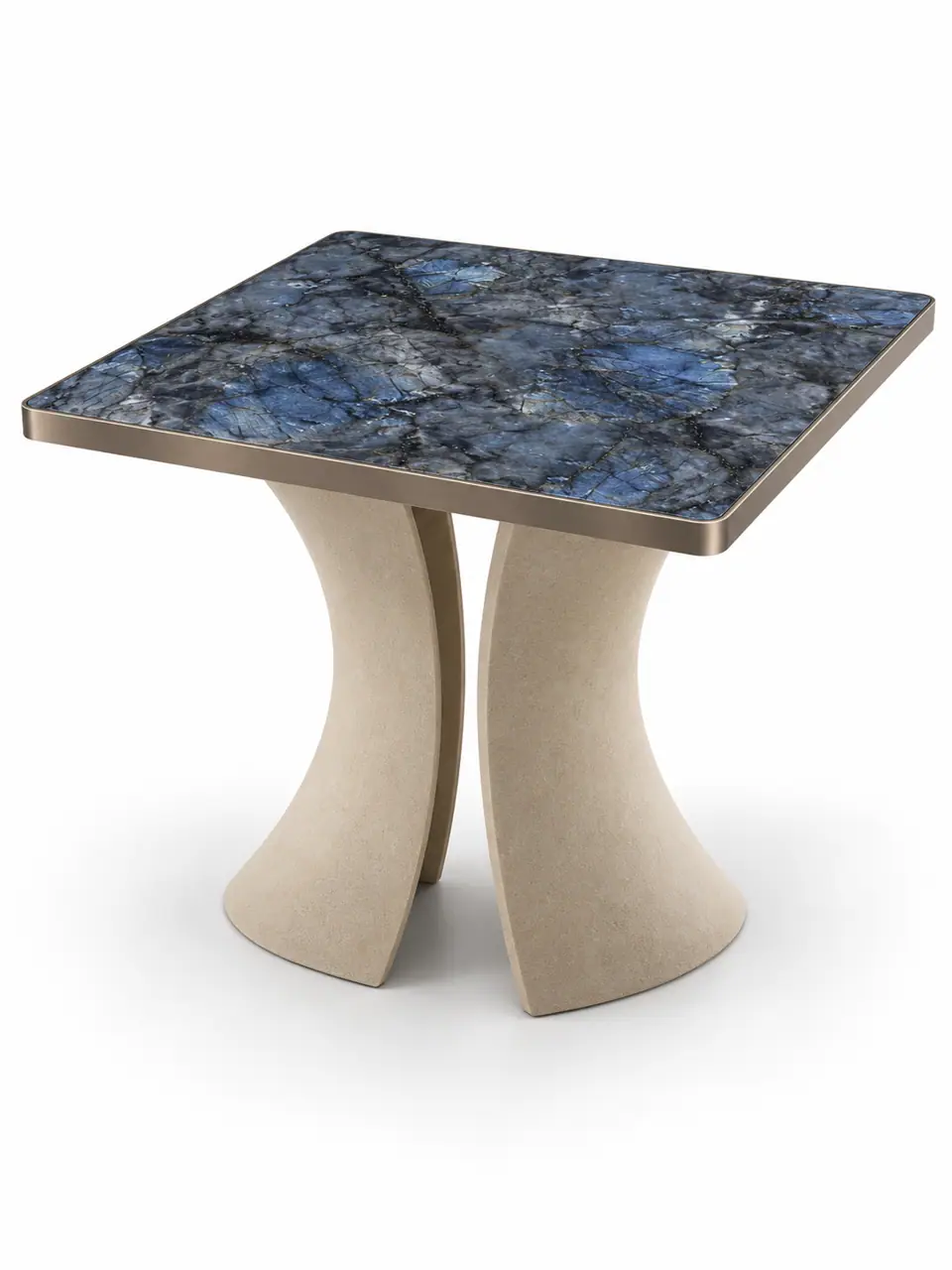
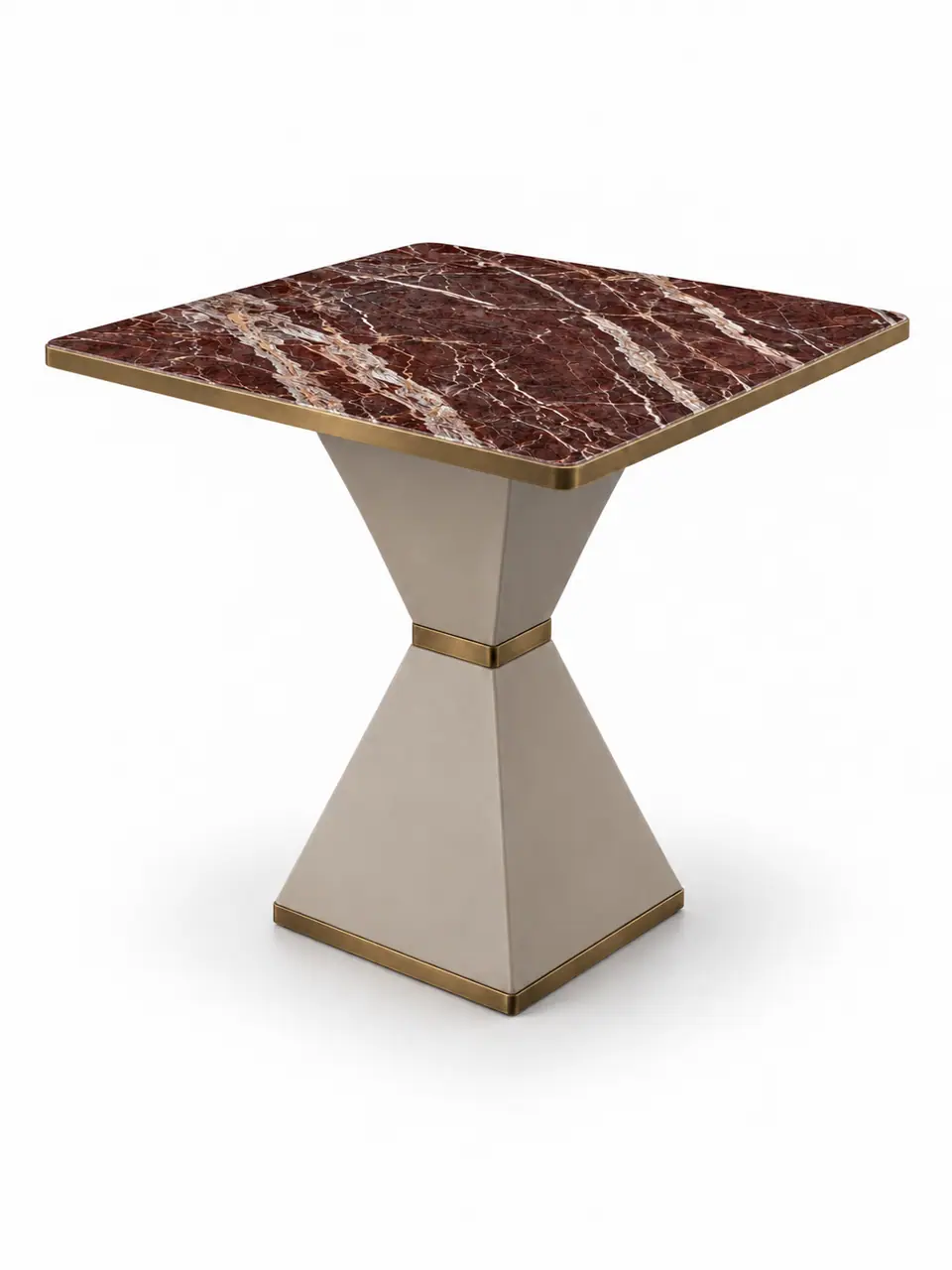
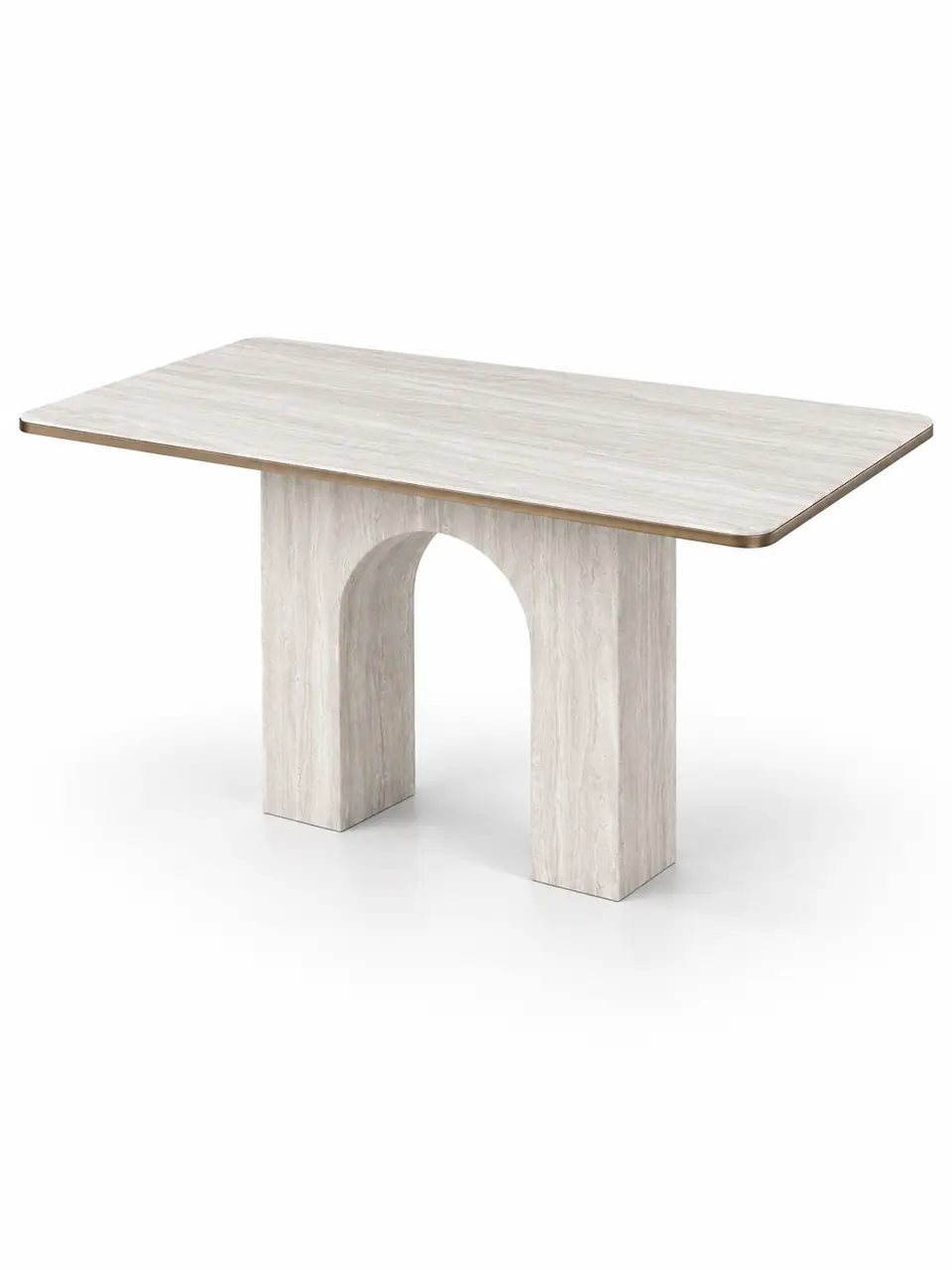
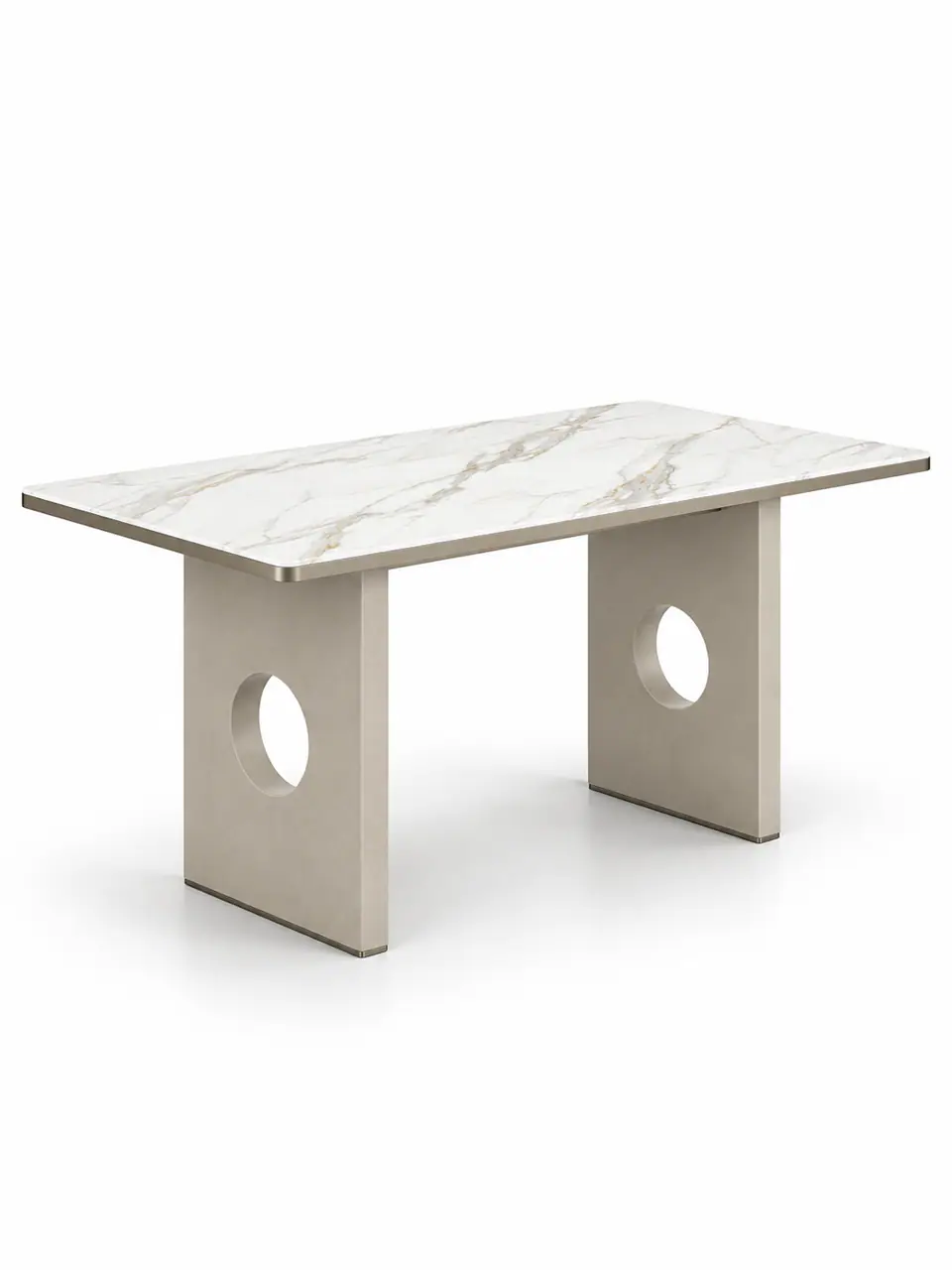
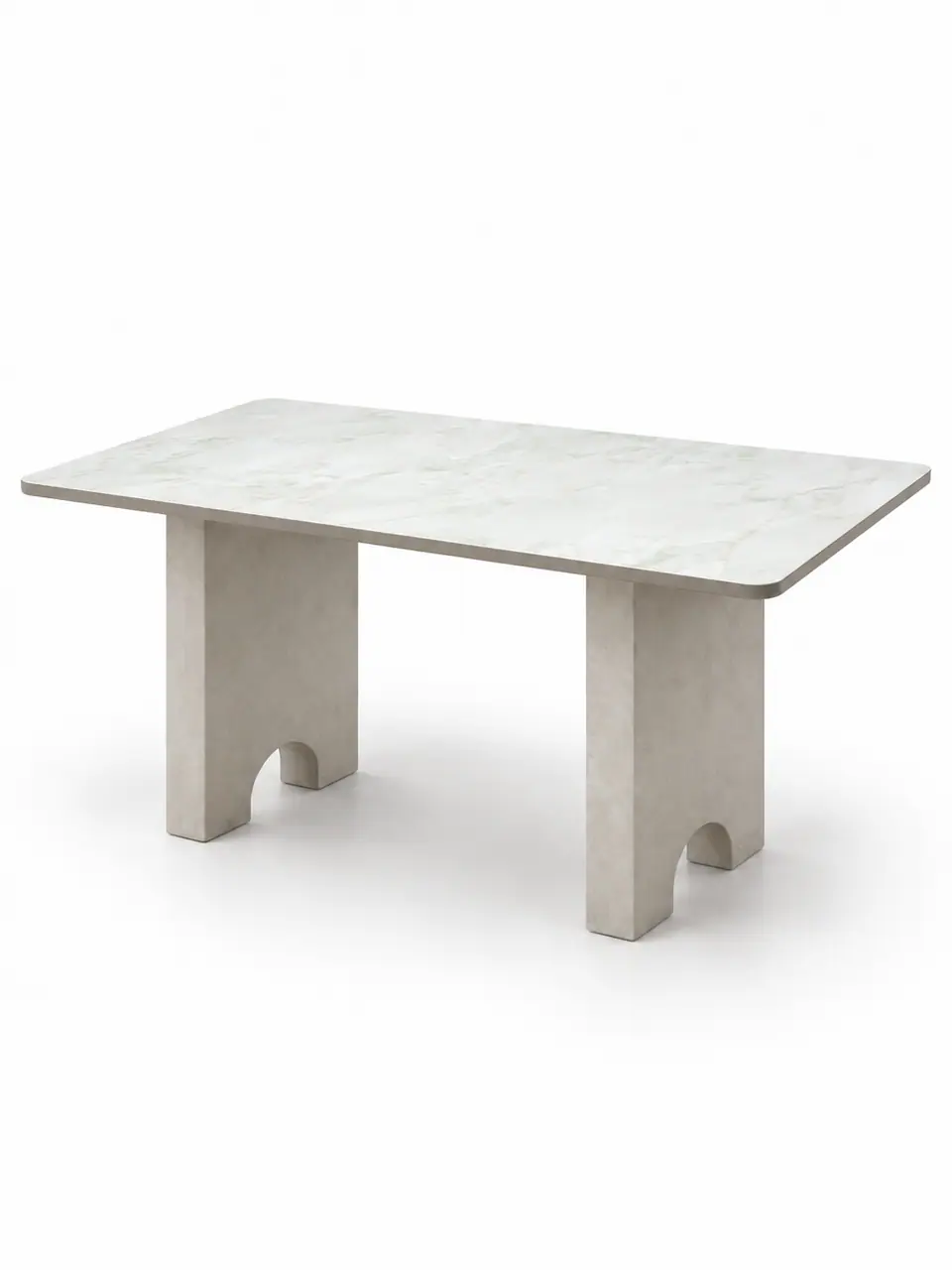
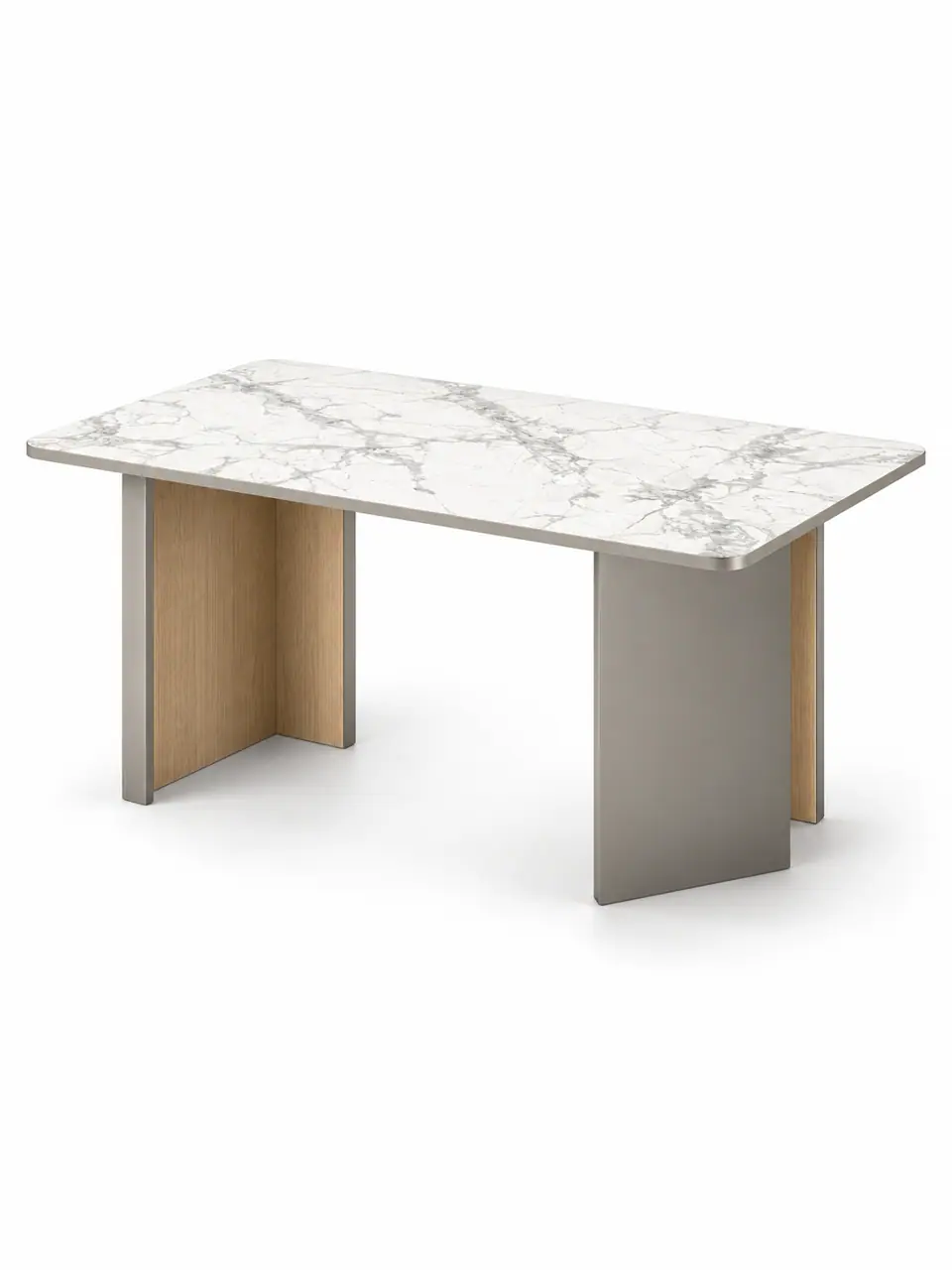
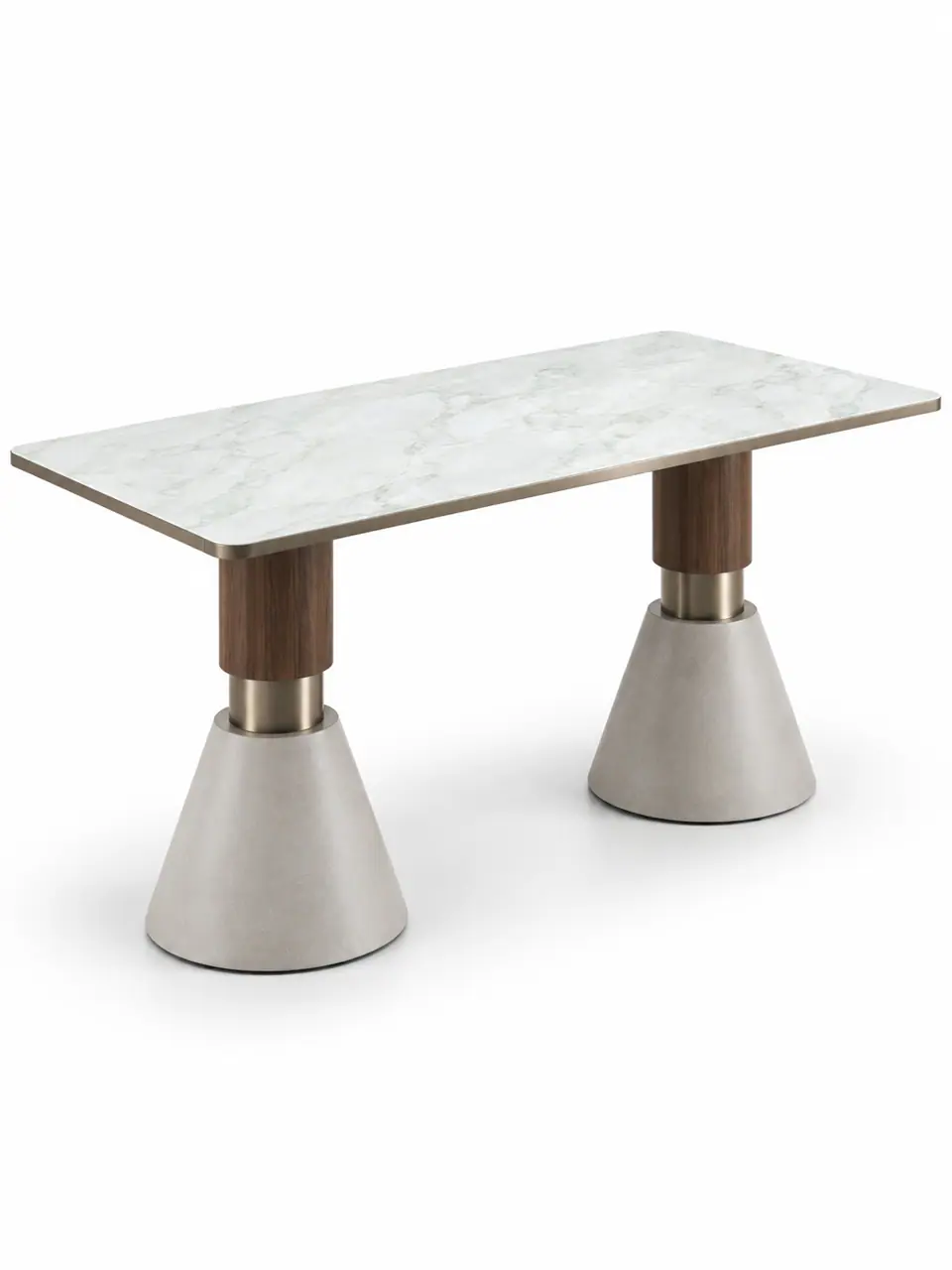
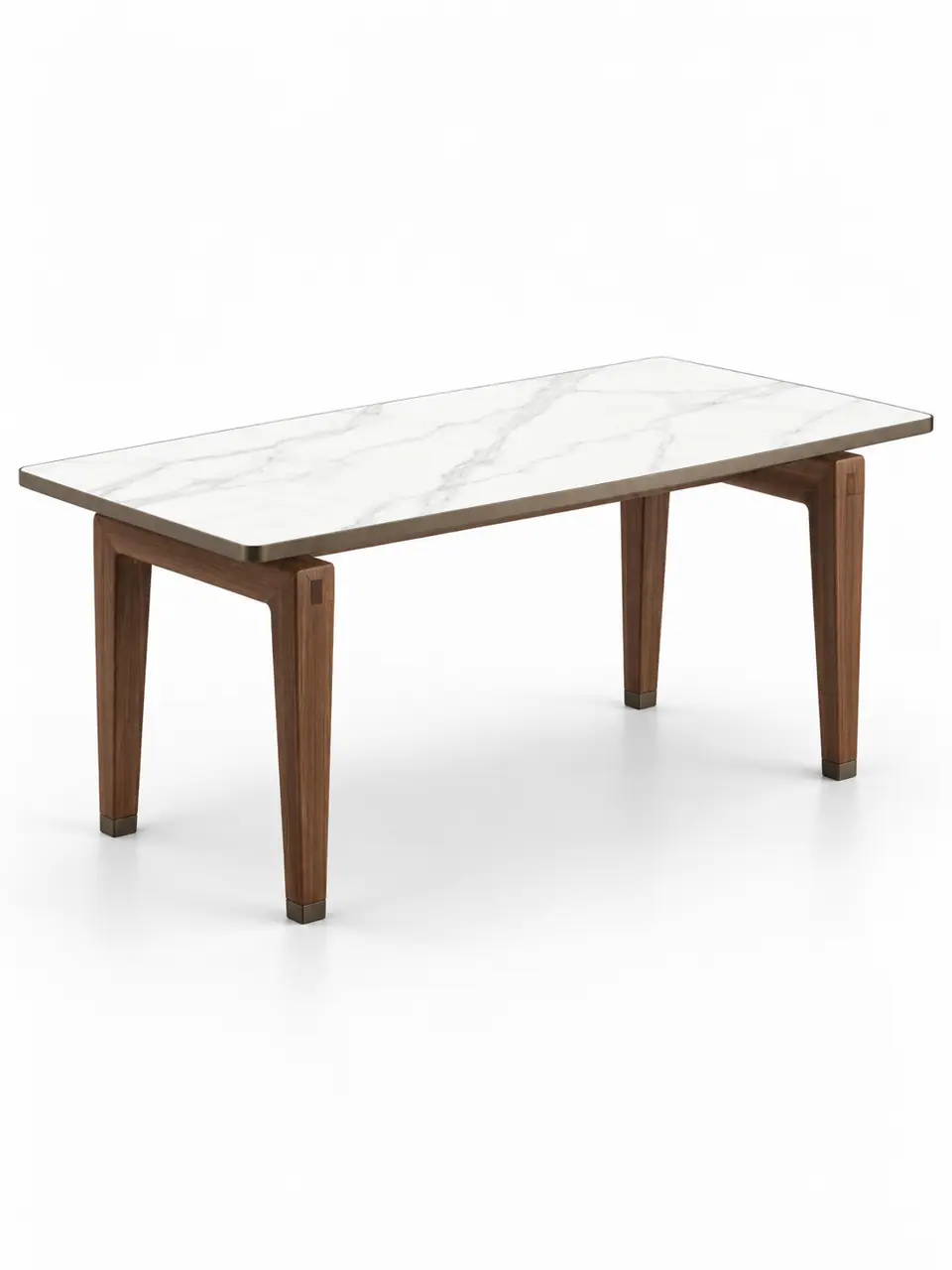
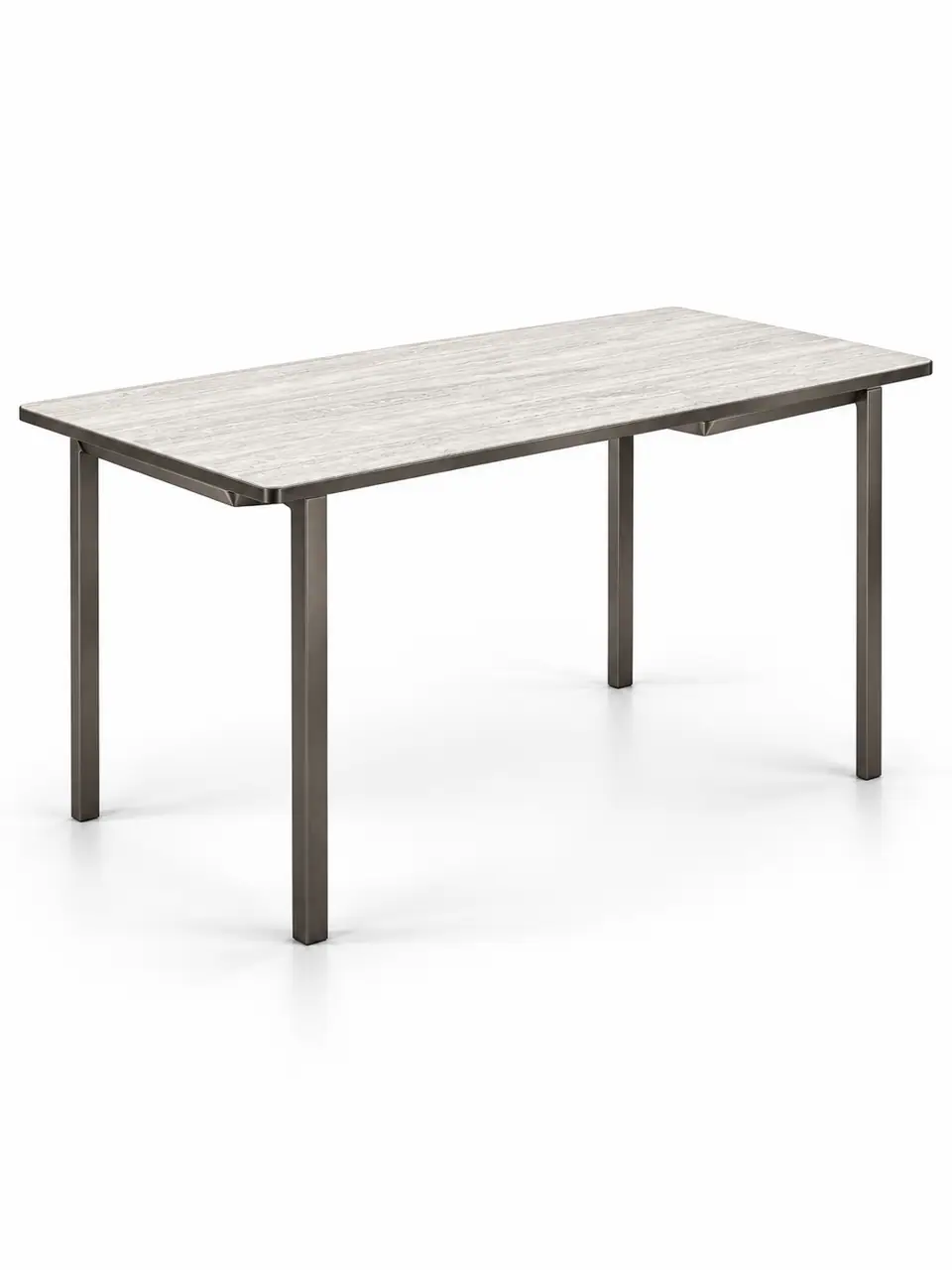
Most restaurant schedules end up with a table line that nobody drew: the banquettes and chairs are specified to the stitch, and the table is "stone top, black base, TBC". These tables close that gap. Each one is a sintered-stone top with a thin metal edge band on a sculpted base, and each is described as three independent lines so it can sit on a finish schedule beside the banquette it serves.
The three-line schedule
| Line | What you specify | Typical choices |
|---|---|---|
| Top | Slab pattern and finish | Limestone, travertine, marble and onyx looks; dark stone looks; plain tones |
| Edge | Metal band colour and sheen | Champagne, bronze, antique brass, warm tin-grey, smoked nickel, brown nickel |
| Base | Form and finish | Column, blade, arch, cone, frame; lacquer, wrap, veneer, stone-look or metal |
Sintered stone is a dense, non-porous slab; for a restaurant top that means it can be wiped down at service speed, and the edge band protects the corner from the knocks that chip bare stone. Ask for a sample of the slab and the edge side by side, because a matte edge and a satin edge read very differently against the same top.
Standard sizes
| Type | Size | Seats |
|---|---|---|
| Square | 23⅝ × 23⅝ in (60 × 60 cm) | 2 |
| Long | 47¼ × 23⅝ in (120 × 60 cm) | 2-4 |
Table height is 29½ in (75 cm), which is dining height. Under ADA 2010 §902, dining surfaces fall between 28 and 34 in (711-864 mm) with at least 27 in (686 mm) of knee clearance, so check that the base you pick leaves that clearance at the accessible positions on your plan. Other sizes, round tops and other slab patterns or edge colours are made to order.
Numbering
Tables in this collection use an ST- prefix, continuing the SB- (banquette) and SC- (chair) numbering, so one schedule can carry all three. We issue a drawing for each table with top, edge and base called out on separate lines.