Custom Seating Lead Time and Shipping: Building It Into Your FF&E Schedule
How shop drawings, COM arrival, tag labelling and freight terms set the real lead time for custom banquettes and chairs sent from Foshan to the US, UK and EU.
Short answer: For custom upholstered seating, the production clock does not start when the purchase order is signed. It starts when shop drawings are approved, the pre-production sample (if any) is signed off, and every COM or COL material has physically arrived at the factory. From that point, production is typically 30-45 days for standard designs and 45-60 days for custom work, plus ocean transit and clearance, confirmed in each quote. Most schedule slips on hospitality projects happen before that clock starts, not after.
This guide is written for architects, interior designers and FF&E procurement teams who need to place seating inside a project schedule with confidence. Spec Seating (a line by EASEN Commercial Furniture) builds to dimensioned drawings in our own production base in Lecong, Foshan, and ships export-packed by sea on FOB, CIF or DDP terms on request.
Where does the lead time actually begin on a specified item?
On a spec job, "lead time" is often quoted as if it were a single number. In practice it is a chain of gates, and only some of them are controlled by the manufacturer.
| Gate | Who controls it | What closes it |
|---|---|---|
| Specification issued | Designer / specifier | Finish schedule, plan, elevations, quantities |
| Shop drawings submitted | Manufacturer | Dimensioned drawings per tag, with construction notes |
| Shop drawings approved | Designer, often with owner and GC | Signed or stamped approval, revisions closed |
| Sample / strike-off approved | Designer | Written sign-off on a seat section, finish chip or full piece |
| COM / COL received | Fabric vendor and procurement firm | Material at the factory, checked for quantity and flaws |
| Deposit received | Owner or purchasing agent | Funds cleared, PO acknowledged |
| Production | Manufacturer | Usually 30-45 days (standard items) or 45-60 days (custom items) |
| Pre-shipment inspection | Manufacturer, optional third party | Photos and video per tag; balance released |
| Freight and clearance | Forwarder and customs broker | Delivery to site, warehouse or receiver |
The useful habit is to track the first five gates as their own line items in your procurement log. If drawings sit in review for three weeks, the delivery date moves three weeks, whatever the PO says.
How do shop drawings and samples gate the clock?
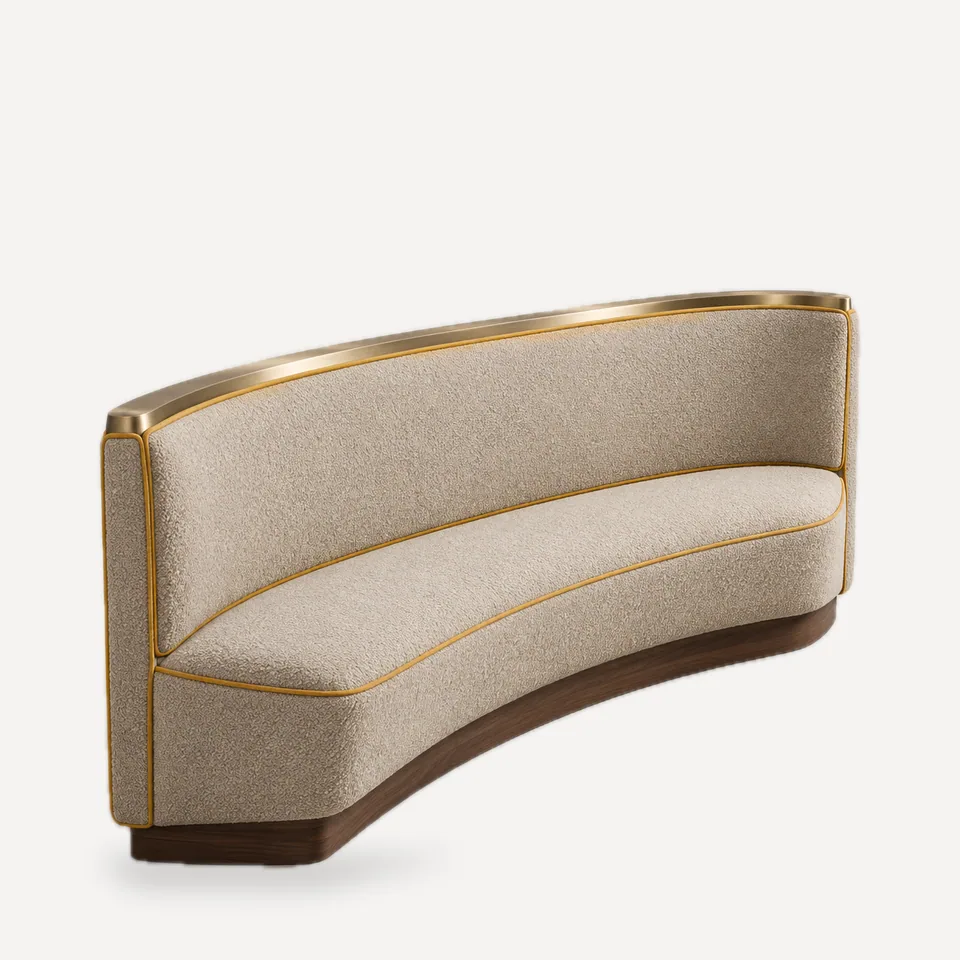
We issue dimensioned shop drawings for every custom tag before anything is cut: overall length, seat height and depth, back height and rake, end details, base or plinth, fixing method and upholstery layout (channel spacing, railroaded or up-the-bolt, seam positions). For curved work, such as a variable-radius curve banquette, the drawing also confirms radius, chord and how the run is split into sections.
Three things keep this stage short:
- Field-verified dimensions. Drawings based on design-intent plans often need a second round once the GC measures built walls. Send site dimensions as early as the walls exist.
- One consolidated comment set. Designer, owner and contractor comments on separate days produce separate revision rounds.
- Decide on samples early. A pre-production sample is available on request, but it adds its own make-and-ship time. Decide at quote stage whether you need a full piece, a seat section or finish chips only.
When must COM and COL arrive at the factory?
Customer's own material is the most common reason a custom seating order sits idle. We cannot cut until all of it is on hand, because a short or flawed bolt changes the cutting plan for the whole run.
- Yardage: we confirm COM yardage per tag on the shop drawing, including allowance for pattern repeat and railroading. Order to that figure, not to an early estimate.
- Ship-to: COM goes to our factory in Lecong, Foshan, clearly marked with the project name and tag numbers. Your procurement firm or fabric house can ship it by air or by sea depending on how much float the schedule has.
- Inspection on arrival: we check quantity, colour against your approved cutting and visible flaws, and report back before cutting. If something is wrong, it is cheaper to find out then.
- Backing and treatment: if the fabric needs backing or a fire-retardant treatment to meet the destination market's rules, decide who does it and where before it ships.
For chairs in our COM chairs range, the same logic applies at smaller quantities: one late cut length can hold a whole batch of seats.
How is a specified order packed and labelled for the site?
Packing is where the finish schedule meets the loading dock. We label every carton or crate with the information your receiver and installer need to put the right piece in the right place without opening everything.
| Label field | Purpose |
|---|---|
| Project name and PO | Matches the shipment to the order at the warehouse |
| Tag number from your schedule | Ties the piece to the plan and the finish schedule |
| Room or area | Lets the installer stage by floor or zone |
| Section number (e.g. "3 of 5") | Keeps long or curved runs in order |
| Finish / fabric code | Allows a check without unwrapping |
| Carton count and gross weight | Supports receiving and handling |
Long banquette runs are built in sections sized for the access route, which we confirm with you at drawing stage: door widths, corridors, stair turns and lift car dimensions. Upholstered pieces are wrapped, corner-protected and cartoned; heavier or delicate items go in crates with ISPM-15 compliant timber where solid timber packing is used. Loose chairs ship assembled or knock-down depending on design.
Which freight terms work best for trade projects?
We quote FOB, CIF or DDP on request. The right term depends on who in your project team already manages logistics.
| Term | Typical fit on a spec project |
|---|---|
| FOB (China port) | Procurement firm or owner has its own forwarder and consolidates several vendors |
| CIF (destination port) | Owner wants a simple ocean price and has a customs broker at destination |
| DDP (named place) | Small project team that wants one delivered price to site or receiver |
On larger hospitality projects, procurement firms often consolidate seating with casegoods, lighting and other FF&E at a forwarder's warehouse in South China before loading. We can deliver to that consolidator and provide packing lists in the format they require.
Notes by market
- United States: an Importer of Record, a customs bond and ISF filing are normally handled by your broker or forwarder. China-origin furniture is subject to additional Section 301 duties on top of the standard tariff; rates and exclusions change, so your broker should confirm classification before budgeting.
- United Kingdom: since Brexit, goods into Great Britain need an importer with an EORI number, a customs declaration (usually lodged by an agent) and payment of any import duty and import VAT. Fire documentation for upholstered seating should be agreed before production.
- European Union: goods are cleared in the first EU member state of import, with the importer needing an EU EORI number; duty and import VAT apply under that member state's procedure.
What happens between production and shipment?
Before the balance is paid and the goods leave the factory, we send pre-shipment photos and video organised by tag: dimensions checked against the drawing, upholstery details, finish and packing. If your client or procurement firm prefers an independent pre-shipment inspection by a third-party firm such as SGS, QIMA or another inspector of your choice, we welcome it and will give the inspector access and the approved drawings. The usual commercial flow is a deposit to start production and the balance before shipment, with the split confirmed in each quote.
Planning steps for designers and procurement teams
- Issue the finish schedule with tag numbers and quantities; request a quote with drawings for custom tags.
- Release site-verified dimensions for wall and curved runs as soon as walls are built.
- Return one consolidated set of shop-drawing comments per round.
- Approve the sample or finish chips in writing.
- Order COM/COL to the confirmed yardage and ship it to Lecong, marked by tag.
- Confirm the Incoterm, forwarder or consolidator and destination broker.
- Confirm access dimensions so section splits are right.
- Sign off the tagged pre-shipment photo and video record, or send third-party QC.
- Arrange receiving: dock or site, unloading labour, storage if the site is not ready.
Common mistakes
- Treating the PO date as the start date. Production starts after drawings, samples and materials are all closed.
- Ordering COM from preliminary yardage. Pattern repeat and railroading change the figure; order from the shop drawing.
- No tag numbers on fabric shipments. Unmarked bolts at a busy factory cost days.
- Ignoring the access route. A banquette drawn as one length may need splitting to reach a basement dining room.
- Booking freight before production is complete. Storage and demurrage charges follow.
- Assuming a fire standard. CAL TB 117-2013, BS 5852 / BS 7176 and EN 1021 call for different foams and fabrics; state the requirement before production. We specify materials to the destination market's rules on request, and supply test reports for specific items where available.
FAQ
How long does custom seating take to ship from China?
After shop drawings and samples are approved, plan on roughly 30-45 days of production for standard items and 45-60 days for custom ones. Ocean transit and customs clearance are added on top and vary by route and port; your forwarder can confirm current schedules. Each quote states the expected timeline.
Can you ship our seating to our procurement firm's consolidator?
Yes. We can deliver to a forwarder or consolidation warehouse in South China and provide packing lists and labels in the format they need, so seating loads with the rest of the FF&E package.
Do you label cartons with our tag numbers?
Yes. Cartons and crates carry project name, PO, tag number, area, section count and finish code, so your receiver and installer can stage pieces without unpacking.
Will long banquettes fit through our doors and lifts?
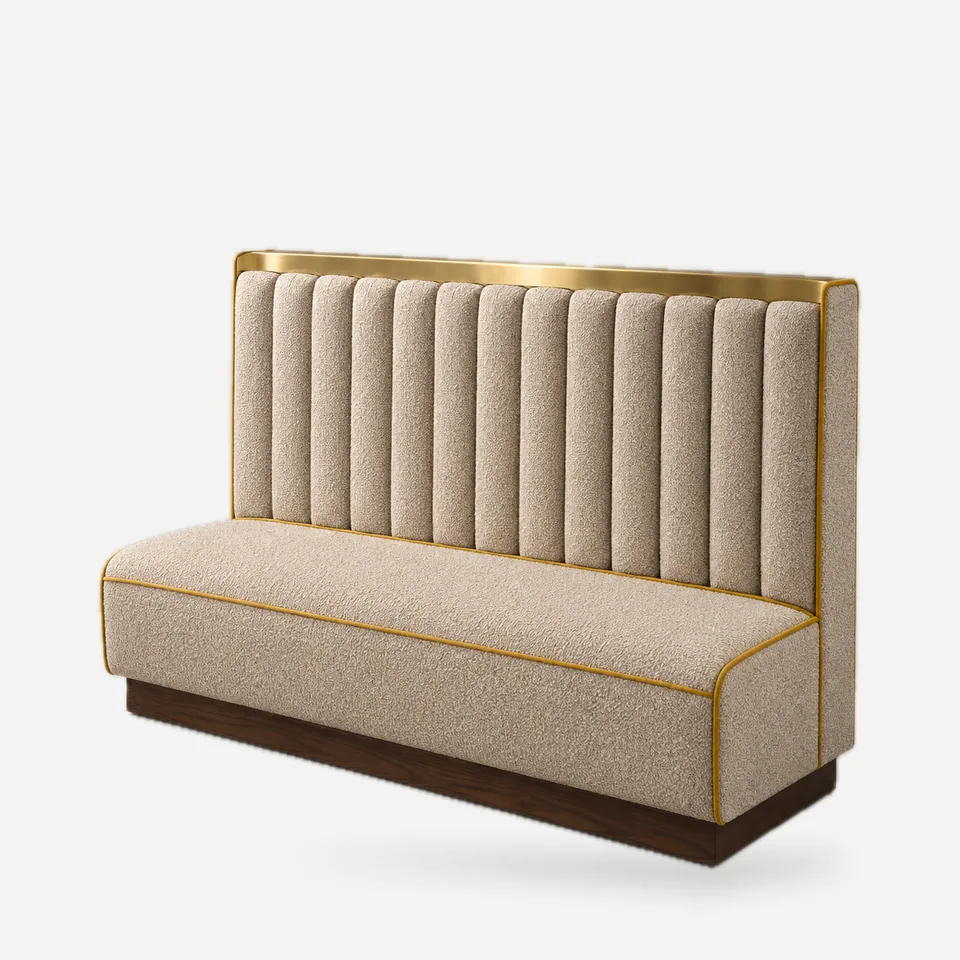
They will if we know the route. Send door widths, corridor turns and lift dimensions before drawings are finalised, and we will split runs into sections that can be joined on site. See our wall banquettes for typical construction.
Send your drawings package or FF&E schedule and we will return a scope review, quote and first shop drawings. Partial packages are fine; tell us what is still in design.
Request a quote